News has surfaced that modern technology will soon be used to create artificial rain in Azerbaijan — but not everyone sees this as progress. In an interview with Bizimyol.info, Dr. Enver Aliyev, head of the Ecogeography Department at the Institute of Geography and a PhD in Agricultural Sciences, criticized the move sharply.
❓ What Is Artificial Rain and How Does It Work?
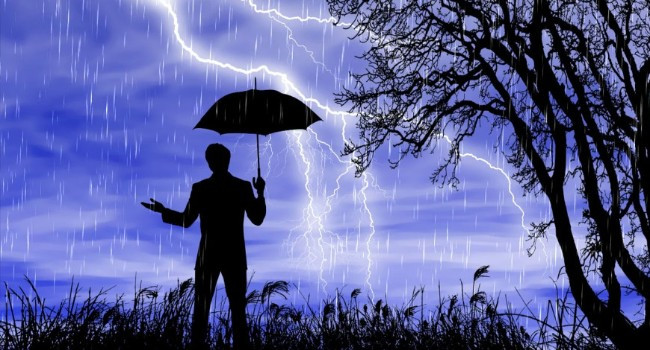
According to Dr. Aliyev, artificial rain involves injecting silver iodide (AgI) into clouds to stimulate condensation. This process causes airborne particles to form water droplets, which fall as rain — similar to how steam condenses into water droplets on a lid.
“But this has nothing to do with us,” says Dr. Aliyev. “Azerbaijan already has normal humidity and precipitation levels.”
🚱 "We Don't Use the Water We Already Have"
He stresses that Azerbaijan has enough natural water resources, particularly from nearly 20 mountain rivers in the Greater Caucasus (from Balakenchay to Qusarchay), but fails to manage them properly.
“If we used these resources effectively, we’d have modern irrigation systems, reservoirs, and water channels for agriculture, fishing, and drinking water.”
Instead, Dr. Aliyev accuses certain groups of misusing national wealth:
“We’re being deceived. The ones promoting this artificial rain idea are just trying to funnel the country’s resources elsewhere under the guise of innovation.”
💸 How Much Will Artificial Rain Cost?
While official figures have not been released, Dr. Aliyev warns that any funding will be wasted.
“This is just another scheme to extract money from the state. Those proposing artificial rain simply don’t know how to manage the country’s resources — or they don’t want to.”
🌾 "We've Lost One-Third of Our Arable Land!"
The most alarming revelation from Dr. Aliyev:
“We’ve already lost one-third of our arable land due to poor water management and neglect.”
He recalls a time when Azerbaijan had:
- 275,000 hectares of vineyards
- Hundreds of thousands of hectares for tobacco, melons, grains, and animal feed
- 600,000 tons of cotton harvested annually
All of this was supported by efficient irrigation. Now, due to irresponsible governance, botched land reforms, and disinterest in agriculture, most of that land is no longer cultivable.
🧠 "The Problem Isn't the Climate — It's Us"
Even countries with similar or worse climates — like neighboring Georgia — aren’t in such dire straits.
“We must stop blaming nature and start fixing the internal rot,” Dr. Aliyev concludes.
Reported by Günel Həsənova, Bizimyol.info