As political unrest grows in Iran, the exiled son of the former Shah, Reza Pahlavi, has stepped into the spotlight, declaring himself the leader of a prospective transitional government. But his claim has been met with outrage and deep skepticism among Iran’s non-Persian communities—particularly Azerbaijanis, who carry the scars of historical violence under his father's rule.
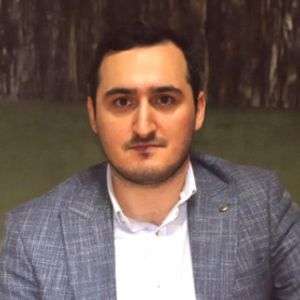
Speaking to Bizimyol.info, Sadig Isabeyli, a political analyst and head of the Savalan Research Center, and a member of the GAMAC Executive Board, denounced Reza Pahlavi’s recent announcement as not only politically tone-deaf, but also historically offensive. “He says, ‘I will lead the transition, I will do this and that,’” Isabeyli remarked. “But his family’s past is drenched in blood—especially the blood of non-Persian minorities. Let’s not forget: the 1946 massacre in Southern Azerbaijan carried out by his father is still commemorated in Iran as a cause for celebration. They host events every year to honor that atrocity. How can someone who glorifies genocide present himself as a liberator?”
The 1946 military campaign in Southern Azerbaijan, which led to the violent suppression of Azerbaijani autonomy in cities like Tabriz, Urmia, Zanjan, and beyond, remains one of the darkest chapters in Iran’s modern history. For many Azerbaijanis, Reza Pahlavi’s emergence as a self-declared leader of Iran's future is a step backwards.
Isabeyli argues that any political transformation confined to a Persian-centric vision of Iranian unity is doomed to fail.
“As long as the mindset of ‘one nation, one culture, one state’ persists, no meaningful change can occur in Iran. Even if someone manages to seize power, it won't last. Another wave of major upheaval will follow in 30 or 40 years,” he said.
He believes true and lasting change in Iran must begin with recognizing the rights of non-Persian ethnic groups—particularly the large and politically active Azerbaijani population in Iran’s northwestern provinces.
“Any transition must allow nations like the Azerbaijani Turks to determine their own future, and this right must be formally acknowledged,” Isabeyli insisted.
So far, he says, no foreign government has shown the courage to support this vision of multi-ethnic self-determination.
“Southern Azerbaijanis are one of the most influential forces in Iran’s sociopolitical landscape,” he added. “They will not allow themselves to be used again as pawns in someone else’s political game—only to be betrayed in the end.”
Isabeyli emphasized the importance of timing and conditions, noting that many other ethnic communities look to the Azerbaijani Turks for signals of resistance.
“If the Azerbaijani Turks remain silent, others will wait as well,” he said. “We’re not there yet. Several crucial phases of this movement remain unfinished. But in time, we will assess, and the people will rise with clarity.”
Orhan Musabeyli, Bizimyol.info